Listen to this article

Sandra Van Scotter Talks Healthcare, AI, Immigration, Water, and High-Speed Rail

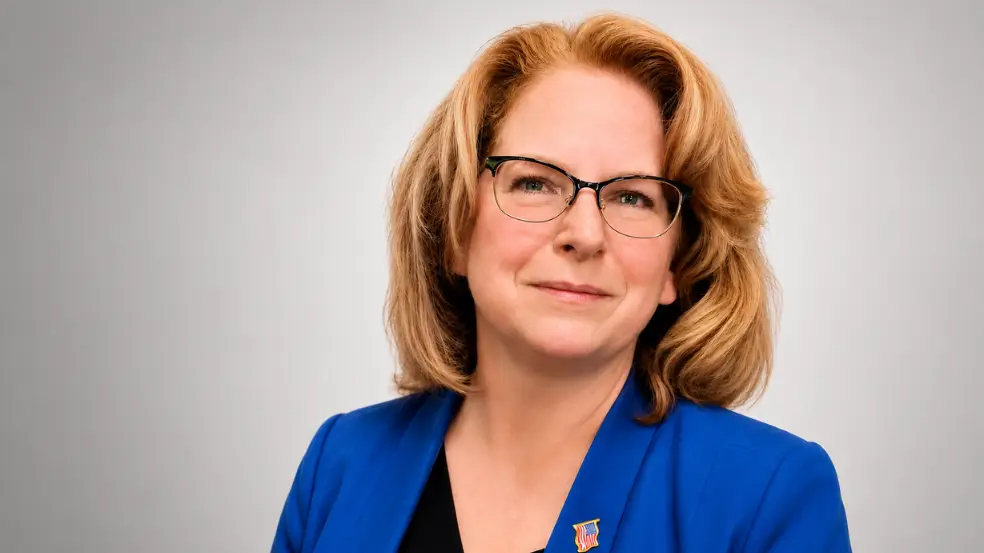
In a lengthy and detailed conversation on Real American Matters, California Congressional candidate Sandra Van Scotter sat down for an in-depth interview covering some of the most controversial and important issues currently facing California’s 20th Congressional District and the nation as a whole.

The discussion focused heavily on healthcare costs, groundwater sustainability, immigration reform, artificial intelligence, data centers, agriculture, high-speed rail, Second Amendment rights, campaign financing, and what Van Scotter described as the growing disconnect between everyday Americans and political leadership.

ADVERTISEMENT

California’s 20th Congressional District includes most of Kern County, parts of Tulare and Kings counties, and a small portion of Fresno County. The district represents a unique blend of agriculture, oil production, military interests, small towns, working-class communities, and rapidly developing technology infrastructure.

Throughout the interview, Van Scotter repeatedly emphasized what she described as a “common sense approach” to governing, arguing that voters are increasingly tired of extreme political rhetoric and are looking for candidates willing to discuss issues in practical terms rather than through partisan talking points.

ADVERTISEMENT

A Campaign Built Around Healthcare Experience

One of the first major topics discussed was Van Scotter’s background in healthcare.

Unlike many traditional political candidates, Van Scotter explained that she has never held elected office before entering the congressional race. Instead, she comes from a healthcare background, specifically as a respiratory therapist who worked directly with patients during medical emergencies and recovery situations.

ADVERTISEMENT

According to Van Scotter, those experiences shaped her perspective on politics and public service.

She explained that healthcare workers are often forced to focus on the actual needs of the person in front of them, regardless of politics, party affiliation, or ideology. She said that mindset influenced her belief that elected officials should represent everyone in their district, not just the people who voted for them.

ADVERTISEMENT

Van Scotter also discussed her current work advocating for adults with intellectual and developmental disabilities. She said much of her decision to run for office came after seeing how recent federal policy changes could impact vulnerable populations who rely on healthcare systems, Medi-Cal, disability support programs, and social services.

The conversation then shifted toward rising healthcare costs and the growing burden many seniors and low-income residents are beginning to experience.

ADVERTISEMENT

The host referenced personal experiences involving rising medication copays for elderly family members, explaining how costs that were once manageable are now becoming difficult for many seniors living on fixed incomes.

Van Scotter agreed that many residents are already beginning to feel the effects of recent policy changes involving Medi-Cal and Medicare-related coverage.

She warned that many families may soon face difficult financial decisions involving medicine, rent, food, utilities, and other basic necessities.

PAC Money and Political Influence

One of the most notable moments during the interview came when the discussion turned toward PAC money and campaign financing.

Van Scotter stated clearly that she does not accept PAC money and does not plan to accept PAC money during her campaign.

She argued that corporate influence, lobbying groups, and political action committees have significantly shaped modern politics and contributed to public distrust in government.

According to Van Scotter, politicians often become financially dependent on organizations that expect favorable votes and policy decisions in return.

She also made a distinction that surprised some listeners when she stated that she views union PACs and corporate PACs similarly in terms of political influence.

While she said she supports unions and recognizes the historical role unions played in worker protections, she argued that any large financial influence in politics can create conflicts of interest.

The discussion highlighted growing voter frustration with the perception that many elected officials are influenced more by donors and lobbying groups than by constituents themselves.

Van Scotter repeatedly returned to the idea that politicians should answer directly to voters rather than outside financial interests.

Dialysis Centers, Healthcare Profits, and Oversight

The conversation also explored concerns involving dialysis providers and the broader healthcare industry.

The host raised questions about large dialysis corporations, including concerns about whether profit motives are beginning to outweigh patient-centered care.

Van Scotter acknowledged that companies like DaVita operate as for-profit healthcare providers and said she believes there needs to be stronger oversight in healthcare industries where large corporations generate significant profits from ongoing treatments.

The discussion focused on how dialysis patients often become dependent on recurring treatments simply to survive, creating a system where patients may feel trapped in long-term care cycles.

Van Scotter described dialysis as an exhausting and life-altering process for patients, comparing it to what many patients describe as “running a marathon in a chair.”

She also warned that future healthcare cuts could create additional stress on dialysis systems, potentially reducing access or increasing wait times for patients who already face major health challenges.

America’s Healthcare Technology Gap

Another major portion of the interview focused on medical technology and why countries like Japan and China appear to be moving faster in certain healthcare innovations.

The discussion referenced reports that some countries are already implementing advanced screening technology and AI-driven medical systems capable of detecting illnesses much earlier than traditional methods used in the United States.

Van Scotter argued that America’s healthcare system is still heavily driven by profit incentives rather than prevention.

According to her, preventative technologies often face resistance because early detection and prevention can reduce long-term profits within the healthcare industry.

She also raised concerns about liability risks and overregulation, arguing that many companies avoid introducing new medical technologies in the United States due to fears of lawsuits and regulatory complications.

The discussion expanded into broader concerns involving California regulations and whether excessive bureaucracy slows innovation and economic development.

Water, Agriculture, and the SGMA Debate

Water sustainability became one of the central topics of the interview.

Van Scotter discussed the Sustainable Groundwater Management Act (SGMA), commonly referred to as SIGMA during local discussions.

The law was passed in 2014 to address decades of groundwater over-pumping across California.

The interview explored how excessive groundwater pumping contributed to land subsidence throughout portions of the Central Valley.

Subsidence occurs when underground aquifers collapse after too much water is removed, permanently reducing the ability of those groundwater basins to recharge.

Van Scotter argued that many of the problems involving SGMA stem from lobbying efforts that weakened portions of the legislation during its development.

She claimed that agricultural interests, water interests, and political lobbying groups all played roles in shaping the final law.

The conversation highlighted growing frustration among residents who believe California has failed to create a long-term sustainable water strategy for agriculture-heavy regions like the Central Valley.

The host also discussed concerns that water resources are increasingly being redirected toward urban regions while rural agricultural communities face tighter restrictions and rising costs.

Data Centers Become a Major Topic

One of the most extensive sections of the interview focused on proposed data centers and artificial intelligence infrastructure projects being planned throughout parts of California’s 20th Congressional District.

Van Scotter explained that several proposed data centers are being considered near military installations in areas such as Ridgecrest, Rosamond, and surrounding desert communities.

According to Van Scotter, many of these projects are expected to support AI systems, military operations, cloud computing infrastructure, and future technology development.

However, she raised serious concerns about water usage.

She stated that several of the proposed locations already face severe groundwater stress and over-pumping issues.

In one example, she explained that a small nearby community reportedly lost access to its local water system and now relies on imported water supplies, while proposed data center developers are still seeking permission to drill additional wells.

The discussion highlighted a growing national debate over AI infrastructure and its environmental impact.

Large-scale data centers consume enormous amounts of electricity and water for cooling systems and server operations.

Van Scotter questioned whether California is moving too quickly toward AI expansion without fully considering long-term environmental consequences.

The host added that many Americans are becoming increasingly concerned about technology companies consuming massive amounts of resources while ordinary residents face water restrictions and rising utility costs.

The conversation framed data centers as part of a larger issue involving technology growth versus sustainability.

Artificial Intelligence and the Future of Jobs

The discussion then shifted heavily toward artificial intelligence and concerns over future job displacement.

The host argued that AI could eventually eliminate large portions of the workforce across many industries, including transportation, healthcare, retail, logistics, customer service, and administrative work.

Examples included autonomous warehouses, self-driving vehicles, AI customer service systems, and automated office functions.

Van Scotter agreed that major workforce disruption is likely already beginning.

However, she also argued that governments and corporations must prepare for these changes responsibly.

She referenced examples from other countries where companies implementing AI are discouraged from eliminating workers entirely.

The discussion explored the possibility that corporations benefiting from automation may eventually need to contribute more directly toward social safety nets.

Universal Basic Income and Universal Healthcare

One of the more controversial topics involved universal basic income and universal healthcare.

Van Scotter argued that if AI significantly reduces employment opportunities, some form of universal income support may eventually become necessary.

She also suggested that universal healthcare could reduce burdens on employers by removing healthcare costs from private payroll systems.

The conversation explored how many companies currently rely on low-wage labor while taxpayers indirectly subsidize healthcare costs through public assistance programs.

Walmart was specifically mentioned as an example of a corporation frequently criticized for wages that still leave some workers dependent on government programs.

Van Scotter argued that large corporations should contribute more toward the public systems many workers rely upon.

Immigration Reform and Border Security

Immigration became another major topic during the interview.

Van Scotter said she supports border security and believes the United States needs to know who is entering the country.

However, she also criticized what she described as an increasingly fear-based immigration system.

She discussed concerns involving communication failures between immigration agencies and argued that the current system often creates unnecessary confusion and inefficiency.

The discussion also focused on undocumented workers involved in agriculture and food production.

Van Scotter argued that many undocumented immigrants are actively working, contributing to the economy, and trying to support their families.

She proposed more humane pathways for processing immigrants while still identifying and removing dangerous criminals.

The interview also touched on birthright citizenship and the challenges faced by children born in the United States to undocumented parents.

Van Scotter expressed concern that some children may effectively become “stateless” if deported without proper documentation.

High-Speed Rail and California Infrastructure

California’s high-speed rail project generated another lengthy portion of the conversation.

The host questioned why California continues using traditional rail concepts instead of newer technologies such as Hyperloop systems and privately funded transportation innovations.

Van Scotter acknowledged many frustrations involving the high-speed rail project, including cost overruns, delays, lawsuits, contractor disputes, environmental reviews, and bureaucratic obstacles.

However, she argued that completely abandoning the project could create even larger financial and economic consequences.

She noted that thousands of jobs are currently tied to construction efforts and argued that portions of the Central Valley may still experience economic growth tied to future transportation development.

The discussion repeatedly returned to concerns about overregulation and inefficiency in California infrastructure projects.

Comparisons were made to countries like Japan and China, where major transportation and infrastructure projects are often completed much faster.

Gun Rights and Common Sense Regulation

The interview concluded with a discussion involving gun rights and public safety.

Van Scotter stated clearly that she supports the Second Amendment and believes law-abiding citizens should have the right to own firearms.

At the same time, she also supports background checks, red flag laws, and stronger oversight involving individuals with histories of violent behavior or severe mental health crises.

She specifically discussed domestic violence cases and situations where firearms may pose heightened risks.

The host described her approach as more “common sense” than the positions often portrayed by mainstream political narratives.

Van Scotter argued that much of the country actually exists politically in the middle, but louder extremes often dominate public debate.

A Larger Discussion About Political Division

Throughout the interview, both the host and Van Scotter repeatedly emphasized the importance of open dialogue and fact-based discussion.

The conversation often returned to the idea that many Americans no longer fully trust mainstream political messaging and are increasingly researching issues independently through online platforms, social media, podcasts, and alternative news sources.

Van Scotter argued that voters should focus less on party labels and more on individual policies, candidate positions, and real-world impacts.

She described herself as someone willing to have difficult conversations across political lines and repeatedly emphasized transparency throughout the interview.

As the interview concluded, Van Scotter encouraged residents to stay informed, research candidates carefully, and participate in elections regardless of political affiliation.

The discussion ended with a broader message about civic participation, political accountability, and the importance of voters making informed decisions based on facts rather than political tribalism.

What issue do you believe should matter most in California’s 20th Congressional District? Share your thoughts in the comments below.

Add us as a preferred source on Google

Join the Conversation

💬 0 comments 👀 44 views
What Do You Think? Join the conversation below. Your comment helps shape the community discussion.

Your public comment may display your first name and last initial. Your email is not shown publicly.

Join the conversation

Share your thoughts on this story.

Be the first to share your thoughts on this story.

Support KNN

Choose your support amount

Enjoying local news? Support King's Network News and help keep independent community coverage moving forward.

Donate with Cash App

Support KNN local news

Prefer to scan? Use the Cash App QR code below.

Cash App QR code
4 People Reacted
What’s your reaction to this article?

☀️ Start your mornings with Valley AM

Daily news and local stories, with a touch of inspiration delivered fresh to your inbox

We don’t spam! Read our privacy policy for more info.

Francisco Ramirez

Francisco Ramirez

Verified
Reporter, Host, Founder

Francisco Ramirez Jr. is the founder of Kings Network News and creator of Kings Network Business, a platform focused on community engagement, local business support, and digital media innovation across California’s Central Valley.

A former Mayor of Hanford, California, Ramirez launched the popular Winter Wonderland event and brings more than 20 years of experience in business consulting, media strategy, marketing, and entrepreneurship. He is also a motivational speaker, strategist, author, podcaster, and experienced web and graphic designer.

Ramirez created The Invisible Kid: Courage to Succeed, an anti-bullying and self-esteem seminar that has inspired youth throughout the region. Through journalism, consulting, and community-driven projects, he continues working to inform, inspire, and empower others to grow, lead, and make a positive impact.