

There are issues where it is easy to pick a side.
You are either for something or against it. You either support local government or you support state intervention. You either support an assessment or oppose it.
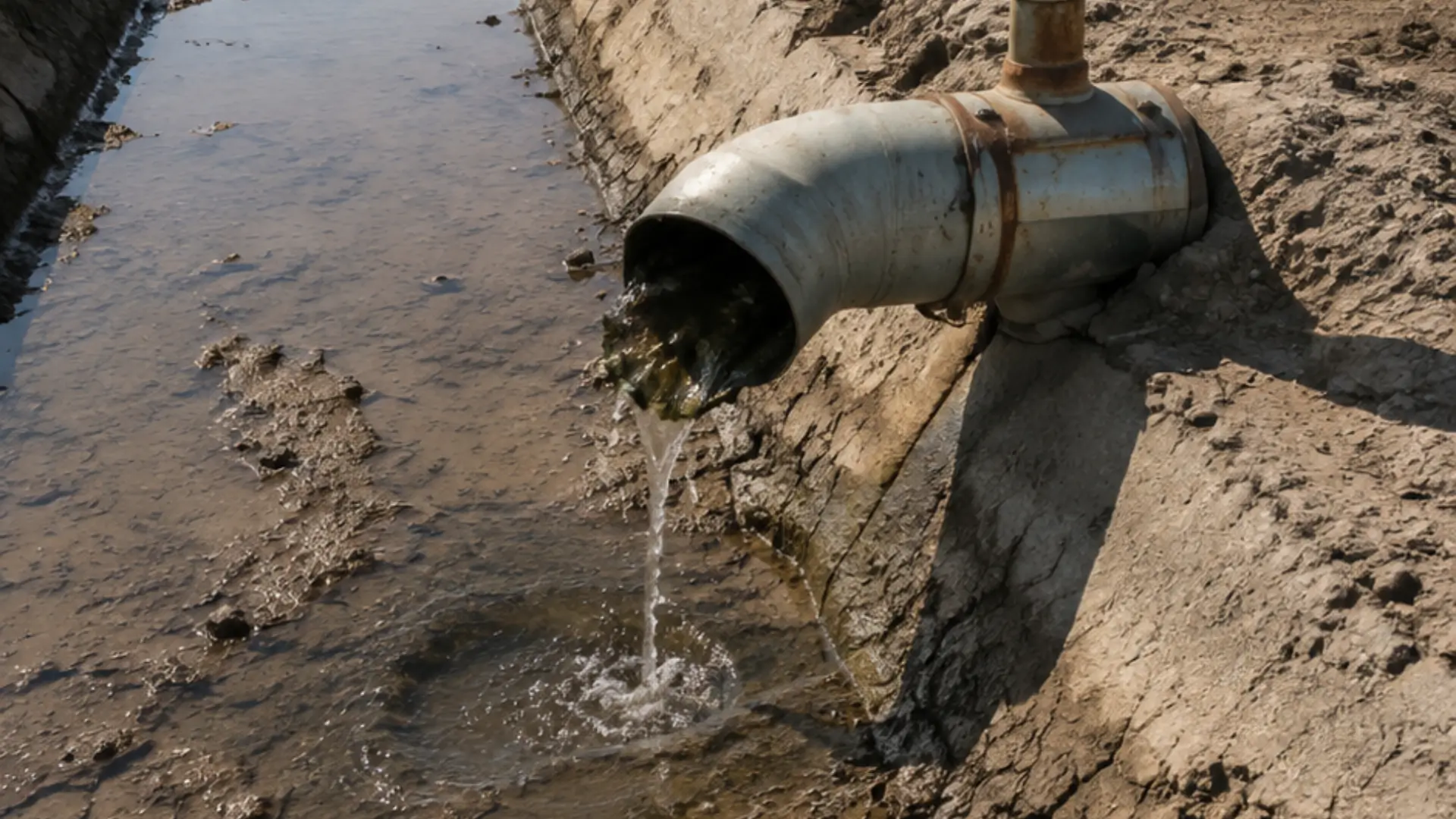
Groundwater in Kings County is not that simple.
After reviewing the Mid-Kings River Groundwater Sustainability Agency’s own materials, looking at the history that brought the Tulare Lake Subbasin to state probation, and considering the recent court fight between the Kings County Farm Bureau and the State Water Resources Control Board, I have reached a conclusion that may surprise some people.

I support keeping groundwater management local. I support giving the Mid-Kings River GSA the resources necessary to do its job. I do not want Sacramento permanently controlling Kings County groundwater.
But supporting local control does not mean giving local government a blank check.
It means demanding that local government actually perform.
And it means asking a difficult question:

How did we get here in the first place?
The Mid-Kings River GSA’s own presentation says the agency was formed in 2016 through a Joint Powers Agreement. It encompasses approximately 97,300 acres, or about 152 square miles, and is one of five groundwater sustainability agencies in the Tulare Lake Subbasin. Its current five-member governing board consists of four members of the Kings County Board of Supervisors and one Hanford City Council member.
That means we are talking about an organization whose roots go back roughly a decade.
And yet today, in 2026, we are under state probation, facing groundwater reporting requirements, potential state fees, new local assessments and pumping charges, litigation, and the possibility of even greater state intervention.
That deserves an honest conversation.
Not finger-pointing.
Not political theater.
Not automatically blaming Sacramento.
And not automatically blaming farmers.
It requires asking whether our local system was working as effectively as it needed to work.
The State Didn’t Just Show Up One Morning
I understand why people are angry with the State of California.
I have disagreed with Sacramento plenty of times. I generally believe decisions affecting Kings County should be made as close to Kings County as reasonably possible.
But there is something important that gets lost when we simply say, “The state is coming after our water.”
California adopted the Sustainable Groundwater Management Act, commonly called SGMA, in 2014 because groundwater basins throughout California were experiencing chronic overdraft.
The law gave local communities an opportunity to manage groundwater themselves through local groundwater sustainability agencies. The Mid-Kings River GSA’s own materials describe SGMA as granting local control to GSAs while requiring them to develop and implement groundwater sustainability plans. The ultimate goal for critically overdrafted basins such as ours is sustainability by 2040.
In other words, the original concept was not Sacramento managing every well in Kings County.
The concept was essentially this:
You manage it locally. Show us that your plan works. If it doesn’t, the state becomes the regulatory backstop.
The Mid-Kings River GSA’s public handout says essentially the same thing. It states that the state intervenes if local agencies fail to meet SGMA requirements and that the Tulare Lake Subbasin was placed on probation because its groundwater sustainability plan did not provide sufficient evidence that sustainability would be achieved by the 2040 deadline.
That distinction matters.
You can dislike the law. You can disagree with the state’s methods. You can challenge its authority in court.
But we cannot pretend that the state intervention came completely out of nowhere.
The Timeline Should Concern Everyone
The history is particularly important.
According to Mid-Kings River’s own materials, the GSA was formed in 2016. The broader SGMA process required critically overdrafted areas to submit groundwater sustainability plans by 2020.
The Tulare Lake Subbasin plans were subsequently found incomplete in January 2022. After revisions and resubmission, they were determined inadequate in March 2023. The matter was then referred to the State Water Resources Control Board, which voted in April 2024 to designate the Tulare Lake Subbasin as probationary.
The GSA’s own workshop timeline adds another important detail.
It states that a proposed funding plan in the spring of 2024 did not pass. The state placed the basin on probation in April 2024. Mid-Kings established a new management structure in fall 2024, formed its Stakeholder Advisory Committee in January 2025, adopted new policies during 2025, and proposed the current funding plan in August 2026.
That tells me two things.
First, I believe there has been meaningful movement recently.
Second, it appears that much of that movement accelerated after the situation became a crisis.
That is precisely why I cannot simply say the state is the villain in this story.
Sometimes an outside organization looking in is necessary.
Businesses have audits.
Cities have audits.
Government agencies have audits and regulators.
Hospitals have oversight.
Banks have regulators.
Nobody likes someone from the outside coming in and saying, “You’re not getting the job done.”
But sometimes that pressure is exactly what forces an organization to move.
If an agency has had years to address a problem and the problem continues getting worse, eventually somebody is going to ask why.
The GSA itself acknowledges that it currently isn’t fully operational for long-term SGMA implementation and that its operations have relied on member-agency financial contributions, primarily from Kings County.
So when somebody asks me, “Francisco, are you against the state in this fight?”
My answer is:
No, not automatically.
I support local control, but local control has to work.
The Supreme Court Decision Doesn’t End the Fight
The recent California Supreme Court decision makes this discussion even more important.
As reported by SJV Water in the information provided for this opinion, the California Supreme Court declined to review the appellate decision that had reversed a preliminary injunction against the State Water Resources Control Board.
That means the appellate ruling stands as the litigation continues.
But this is not the same thing as saying that every legal argument raised by the Kings County Farm Bureau has been rejected.
According to the report, several issues remain alive, including questions over whether the Water Board exceeded its authority or improperly imposed certain sanctions.
The appellate court also concluded that the Water Board should have evaluated groundwater sustainability agencies individually rather than simply treating the entire Tulare Lake Subbasin as one unit. The litigation also involves the treatment of Tri-County Water Authority and Southwest Kings GSA under what has been described as the “good actor” provision.
Those issues are expected to return to Kings County Superior Court.
So this legal battle isn’t over.
And I support the right of the Kings County Farm Bureau to continue challenging the state where it believes the state exceeded its lawful authority.
That is how our system works.
But winning a lawsuit and solving our groundwater problem are two different things.
Even if every legal question disappeared tomorrow morning, the aquifer would not suddenly refill.
The Number That Should Get Everyone’s Attention
Forget politics for a moment.
Forget Sacramento.
Forget the Farm Bureau.
Forget supervisors.
Forget assessments.
Look at one number:
81,290 acre-feet.
According to the Mid-Kings River GSA’s own workshop presentation, the area has an estimated average annual water demand of 257,484 acre-feet, including about 207,290 acre-feet of groundwater use and approximately 50,194 acre-feet of surface-water use.
The presentation identifies an estimated average annual groundwater overdraft of 81,290 acre-feet.
That is the issue.
You cannot continuously withdraw more water from an underground system than the system can sustainably replenish and expect there never to be consequences.
An acre-foot is approximately 326,000 gallons.
At 81,290 acre-feet, we are talking about an imbalance equivalent to roughly 26.5 billion gallons of water per year.
That doesn’t mean exactly 26.5 billion gallons permanently disappear every year under every hydrologic condition. Groundwater systems are complicated, recharge varies, rainfall varies, surface-water availability varies, agricultural demand varies, and groundwater modeling involves uncertainty.
But the scale should still get everybody’s attention.
An 81,290 acre-foot annual overdraft is not a small bookkeeping discrepancy.
It is the reason this discussion matters.
What Subsidence Actually Means
One of the greatest dangers from excessive groundwater pumping is something called land subsidence.
This needs to be explained because it can sound like some distant scientific term.
Imagine the ground beneath us as layers of sand, gravel, silt and clay containing water in pore spaces.
When groundwater levels fall substantially, pressure within parts of that underground system declines. Certain fine-grained sediments, particularly clay layers, can compress under the weight above them.
When that compression occurs, the land surface can sink.
That is subsidence.
The most troubling part is that some of this compaction can be irreversible.
Think about a sponge.
A normal sponge has spaces inside that can hold water. If you compress the sponge and it springs back, those spaces remain available.
But imagine crushing the sponge so severely that parts of its internal structure permanently collapse.
Even if water becomes available later, you cannot necessarily restore all of the original storage space.
Aquifer systems are much more complicated than a sponge, but the analogy helps explain why subsidence matters.
It isn’t merely about the ground sinking a few inches.
Subsidence can damage canals, roads, pipelines, wells, levees and other infrastructure. It can also reduce an aquifer system’s ability to store water in the future.
Mid-Kings River’s own Proposition 26 cost study recognizes this problem. It states that groundwater pumping can contribute to land subsidence and that subsidence can adversely affect public and private infrastructure. The proposed program therefore includes monitoring, assessment, repair, rehabilitation and potential capacity improvements for affected infrastructure.
The GSA’s Engineer’s Report also specifically identifies land subsidence among the undesirable results SGMA is intended to prevent.
This isn’t somebody inventing a scare tactic.
The GSA itself recognizes the risk.
Water Is a Finite Resource
I have said for some time that I am deeply concerned about our water future.
My personal prediction is that within the next decade, and possibly much sooner in certain areas during severe drought conditions, water availability could become one of the defining economic and political issues facing the Central Valley.
I want to be careful here.
That is my prediction, not a scientific finding that Kings County will literally “run out of water” in four or ten years.
There is no credible basis for claiming that every faucet in Kings County will suddenly go dry on a particular date.
But wells can go dry.
Groundwater levels can fall.
Pumping can become more expensive.
Land can subside.
Water quality can deteriorate.
Agricultural production can be constrained.
And communities dependent upon shallow domestic wells can be particularly vulnerable.
In fact, Mid-Kings River’s own cost study says current evaluations identified four domestic wells that were already dry and eligible for mitigation under a pilot program, with another potentially qualifying for connection to a municipal system.
That should make this real.
These aren’t just lines on a government spreadsheet.
They are people’s wells.
Look at the West
We should also pay attention to what has happened elsewhere in the western United States.
Lake Mead has experienced dramatic declines during the long drought of the Colorado River Basin, although its level rises and falls depending on hydrology and river operations. The reservoir behind Hoover Dam has become one of America’s most visible reminders that enormous water systems are not immune from prolonged drought and over-allocation.
The Great Salt Lake has also experienced severe declines during recent decades, although its condition fluctuates with precipitation, runoff and water use.
Those examples aren’t identical to the groundwater situation beneath Kings County.
Surface reservoirs and underground aquifers function differently.
But the lesson is similar.
You cannot build a water policy around the assumption that tomorrow will always provide enough water to compensate for what we consume today.
Eventually the math matters.
“Just Build More Dams” Isn’t a Complete Answer
Whenever water shortages come up, someone inevitably says:
“Build more dams.”
I support expanding water storage where projects are environmentally responsible, economically feasible and actually provide meaningful water benefits.
California absolutely needs serious discussions about storage, conveyance, groundwater recharge and infrastructure.
But a new dam is not something you decide to build Monday and begin filling Friday.
Major water infrastructure projects can require years of planning, environmental review, permitting, engineering, financing, land acquisition, litigation and construction.
Ten years can actually be an optimistic timeline for some major projects.
That doesn’t mean we shouldn’t build infrastructure.
It means we should stop pretending future infrastructure eliminates the need to manage the water we have today.
We need both.
Storage and conservation.
Infrastructure and groundwater management.
Recharge and responsible pumping.
This should not be an either-or argument.
Desalination Isn’t a Magic Button Either
Another response I hear is:
“Build desalination plants.”
Desalination absolutely has a role in California’s long-term water portfolio, particularly in coastal regions with access to seawater.
But desalination is not free water.
It requires significant infrastructure and large amounts of energy. Brine disposal presents environmental challenges. Permitting can take years. And Kings County is inland, meaning a desalination strategy here would involve additional questions involving source water, treatment and transportation.
I have sometimes used an exaggerated example such as “$5 a gallon” to illustrate how expensive desalination can become.
To be factually precise, municipal-scale desalinated water does not ordinarily cost anywhere near $5 per gallon. Five dollars per gallon would equal more than $1.6 million per acre-foot, which is far beyond normal municipal desalination economics.
The legitimate argument doesn’t need exaggeration.
Desalinated water can cost substantially more than many traditional water supplies, and transporting large quantities of it inland would add substantial infrastructure and energy costs.
That alone makes the point.
There is no cheap machine we can install tomorrow that makes groundwater overdraft irrelevant.
So Why Do I Support the GSA Funding Proposal?
This is where some people may disagree with me.
I support the basic concept of funding the GSA because I would rather see groundwater managed locally than have the State Water Resources Control Board become the permanent manager of our groundwater.
The GSA’s public materials make the stakes clear.
Its proposal includes an annual land-based assessment of up to $26.84 per acre, along with a groundwater pumping fee that could reach $19.24 per acre-foot annually, depending on the applicable year and costs.
The Engineer’s Report projects assessment rates of $26.84 per assessable acre for 2027, $23.29 for 2028, $23.91 for 2029, $22.54 for 2030 and $23.53 for 2031, with $26.84 serving as the proposed maximum assessment rate.
For context, the GSA presentation gives examples of what this could mean for landowners. At the maximum assessment, a 40-acre property would face about $1,074 annually from the land assessment alone. A 250-acre property would face about $6,720. A 1,000-acre property would face $26,840. Pumping charges could come on top of those amounts depending upon actual groundwater extraction.
That is real money.
People have every right to scrutinize it.
But what happens if we refuse to fund groundwater management?
The problem doesn’t disappear.
The state’s requirements don’t disappear.
The aquifer doesn’t magically become sustainable.
Instead, we risk transferring even more authority away from Kings County.
The GSA itself contrasts the two possibilities. Its materials describe a local path involving locally tailored policies, stakeholder participation, accountability and transparent fees, versus a state path involving increased state oversight, less local influence and state-developed restrictions.
On that basic question, I choose local control.
But I want stronger local control than what currently exists.
Four Supervisors Out of Five Is Not Enough Community Representation
This is where I believe the proposal needs improvement.
The current Mid-Kings River GSA board consists of five voting members:
Four Kings County supervisors and one Hanford City Council member.
I respect the supervisors.
I respect the Hanford representative.
This isn’t personal.
It is structural.
When you create an agency capable of influencing groundwater policy, imposing assessments, overseeing pumping-related programs and making decisions that could affect agriculture, homeowners, businesses and future generations, the public deserves meaningful representation at the governing level.
Yes, Mid-Kings River established a Stakeholder Advisory Committee in 2025. That is a positive development.
But an advisory committee is different from having an independent community representative sitting on the governing board with a vote.
I believe the governance structure should be examined to determine whether at least one, preferably two, citizen or stakeholder representatives can be added to the governing structure with meaningful voting authority, consistent with applicable law and the Joint Powers Agreement.
One representative might come from agriculture.
Another might represent residents, domestic well users, disadvantaged communities, small businesses or another broad public-interest constituency.
The exact structure can be debated.
The principle shouldn’t be controversial.
If the public is being asked to fund groundwater management, the public should have a meaningful seat at the table.
Not simply three minutes at a microphone.
Not simply an advisory recommendation.
A seat.
A vote.
Accountability.
Citizen Oversight Would Help the GSA, Not Hurt It
Some government officials might view citizen board members as a complication.
I view them as protection.
They protect the public because they provide another set of eyes.
But they also protect the agency because independent representation increases legitimacy.
When difficult pumping restrictions eventually have to be discussed, citizens will want to know who made the decisions.
When assessments increase or decrease, people will ask why.
When consultants receive contracts, people will ask what they delivered.
When groundwater models change, people will want explanations.
When wells go dry, residents will want somebody representing their interests.
Citizen representation can help answer those questions.
The GSA’s own public handout promises greater stakeholder involvement, transparent and data-informed decision-making, and accountability to the local community.
I agree.
Let’s put that philosophy into the governance structure itself.
There Is Another Issue the County Needs to Address: Data Centers
This brings me to something that I believe could dramatically increase public confidence in this groundwater proposal.
Kings County should seriously consider a temporary moratorium on large-scale data center development while it establishes a comprehensive policy governing their water, energy and infrastructure impacts.
To be clear, I am not claiming there is currently a major operating data center consuming Kings County groundwater.
My concern is about what comes next.
Data centers are expanding rapidly across the United States because artificial intelligence, cloud computing and digital services require enormous computing capacity.
Their water use varies dramatically depending on their design.
Some facilities use substantial quantities of water for cooling. Others use closed-loop systems, air cooling, recycled water or technologies that greatly reduce direct water consumption.
So it would be inaccurate to say every data center automatically consumes enormous amounts of potable or groundwater.
But that uncertainty is precisely why Kings County should establish the rules before projects arrive.
Don’t Put the Cart Before the Horse
Imagine what we’re telling landowners right now.
We’re saying:
Our groundwater basin is critically overdrafted.
We need assessments.
We need pumping fees.
We need monitoring.
We need conservation.
We need sustainability.
We need to prevent subsidence.
We need to protect domestic wells.
We need millions of dollars to operate the system.
We need everyone to sacrifice so we can retain local control.
Fine.
I understand that argument.
But then imagine that, two years from now, a major water-intensive industrial development comes before the county and the public is told:
“We have an opportunity for economic development.”
That is when people will become cynical.
Farmers will ask:
You charged us to conserve water so somebody else could use it?
Residents will ask:
You told us our aquifer was in crisis, but now we’re approving new demand?
That perception alone could destroy public confidence.
This is why I believe Kings County should address data centers now.
Not after applications arrive.
Not after millions of dollars have been invested.
Not after lawyers become involved.
Now.
A Moratorium Would Build Trust
I believe the Kings County Board of Supervisors could significantly improve public confidence by publicly stating that large-scale data center development will not move forward until the county has established a comprehensive policy dealing with water.
A temporary moratorium would give the county time to determine:
How much water could a proposed facility use?
Would groundwater be allowed?
Would recycled water be required?
Would a facility have to demonstrate water neutrality?
Would it be required to recharge groundwater equivalent to its consumption?
What happens during drought?
Would agricultural pumping reductions effectively create capacity for industrial consumption?
How would electricity demand affect local infrastructure?
Who pays for upgrades?
Would local residents receive meaningful economic benefits?
Those questions should be answered before applications are considered.
That is not anti-business.
It is responsible planning.
Give the Public a Reason to Say Yes
If I were advising the supervisors on how to build support for this groundwater proposal, I would tell them to make two commitments.
First:
Add meaningful citizen representation and oversight to groundwater governance.
Second:
Commit to a temporary moratorium on major data center development until Kings County establishes clear protections for groundwater, energy and infrastructure.
Imagine the message that would send.
The county could tell farmers:
“We’re not asking you to conserve water so we can give it to somebody else.”
It could tell residents:
“We’re asking you to help protect the aquifer, and we’re going to protect it too.”
It could tell businesses:
“Kings County welcomes responsible economic development, but our water future comes first.”
That is how you build trust.
The Assessment Must Also Come With Measurable Results
If landowners approve this assessment, the money should not simply disappear into government operations.
There should be measurable benchmarks.
The proposed fixed-cost budget is substantial.
The GSA’s workshop materials show roughly $2.47 million in annual fixed costs under the proposed funding structure, including approximately $1.148 million identified for administration and approximately $1.219 million for operations in the presentation’s budget categories.
Separately, the Proposition 26 study identifies variable-cost programs for dry wells, water quality and subsidence. Those projected variable costs total $1.8 million in 2027, $3.66 million in 2028, $3.3 million in 2029, $1.9 million in 2030 and $1.3 million in 2031.
Those are significant amounts.
So I want taxpayers and landowners to be able to see what they received.
How much did groundwater overdraft decline?
How many monitoring wells were installed?
How many domestic wells were protected or repaired?
How much recharge occurred?
What happened to groundwater elevations?
What happened to subsidence rates?
What projects were completed?
How much was spent on administration?
How much went to consultants?
What measurable progress was made toward exiting state probation?
How close are we to sustainability?
Publish the answers.
Every year.
Put them online.
Make them easy enough for an ordinary resident to understand.
That is accountability.
Local Control Is Not the Same as Government Control
There is another philosophical distinction worth making.
When government officials say “local control,” sometimes what they really mean is local governmental control.
Those are not necessarily the same thing.
True local control should include the people who live here.
Farmers.
Homeowners.
Businesses.
Domestic well users.
Cities.
Rural communities.
Water districts.
Community organizations.
And elected officials.
If five politicians control an agency and four of those five come from the same governing body, someone can reasonably ask whether that represents the broadest possible version of local control.
Again, that isn’t an attack on those supervisors.
It is an argument for stronger institutional design.
The best government system isn’t one that assumes every elected official will always make the correct decision.
The best system creates checks and balances because we know nobody is perfect.
The State Should Be the Backstop, Not the Permanent Driver
My preferred outcome is still very clear.
I want Kings County to regain control.
I want our local agencies to demonstrate that they can sustainably manage groundwater.
I want the state to step back once the legal and scientific requirements have been satisfied.
I do not want Sacramento determining every local pumping decision indefinitely.
The Mid-Kings public notice itself explains that when a local agency is not sustainably managing groundwater, SGMA gives the State Water Resources Control Board a backstop role until local management becomes adequate.
That is how I think we should look at the current situation.
The goal should not be:
How do we defeat Sacramento?
The goal should be:
How do we become so effective locally that Sacramento no longer has a reason to intervene?
That is a completely different mentality.
Sometimes You Need a Fire Lit Under You
Nobody likes hearing this.
But sometimes organizations become comfortable.
Meetings happen.
Reports get written.
Consultants get hired.
Presentations get made.
Committees meet.
Another report comes out.
Another meeting happens.
Meanwhile, the fundamental problem remains.
At some point somebody has to say:
Get off the pot.
Start moving.
Start producing measurable results.
Start fixing the problem.
The GSA’s own timeline suggests the urgency increased dramatically after the 2023 inadequate determination and 2024 probation decision. It shows the failed funding effort in 2024, a new management structure later that year, the creation of the Stakeholder Advisory Committee in 2025, new policies during 2025, and another funding proposal in 2026.
Maybe state intervention was the fire that was needed.
That doesn’t mean the state should stay forever.
It means we should use that fire to build something better locally.
Farmers Cannot Carry the Entire Blame
There is also something I want to make very clear.
I don’t support demonizing agriculture.
Kings County’s agricultural economy feeds people, provides jobs, supports businesses and forms a major part of our identity.
Farmers didn’t invent California’s water system.
They operate within it.
They make decisions based on water rights, contracts, economics, weather, regulations and generations of agricultural practices.
If California wants a sustainable groundwater future, the transition has to be economically realistic.
You cannot simply tell farmers:
“Pump less.”
And then walk away.
We need recharge projects.
Better infrastructure.
Surface-water opportunities when available.
Conveyance improvements.
Incentives.
Technology.
More efficient irrigation where practical.
Crop and land-use strategies.
Dry-well protection.
And long-term planning.
Groundwater sustainability has to be a partnership.
But Physics Doesn’t Negotiate
At the same time, agriculture cannot escape the basic arithmetic.
Neither can cities.
Neither can businesses.
Neither can residents.
If a groundwater basin is consistently withdrawing more water than it replenishes, something eventually has to change.
Political ideology doesn’t change hydrology.
A lawsuit doesn’t refill an aquifer.
A county resolution doesn’t stop subsidence.
A state regulation doesn’t create rainfall.
And a public relations campaign doesn’t create water.
Ultimately, nature keeps its own books.
That is why I support taking action now.
The September Vote Matters
The current proposal is moving toward an important public hearing.
The Mid-Kings River GSA notice schedules the hearing for September 29, 2026, at 1:00 p.m. at the Kings County Government Center in Hanford.
The assessment vote is weighted according to the proportional financial obligation of affected property. Ballots must be received no later than the conclusion of the public hearing, and the proposed assessment can move forward if the weighted ballots in favor exceed those opposed.
The proposed assessment could generate up to approximately $2.5 million annually, with a maximum assessment of $26.84 per assessable acre. The actual annual amount can be set lower by the board depending upon the budget, but the approved maximum cannot be exceeded without another process.
Landowners should educate themselves before voting.
Don’t vote yes because somebody from government told you to.
Don’t vote no because you’re angry at government.
Read the documents.
Ask questions.
Look at the numbers.
Demand commitments.
Then vote.
My Support Comes With Expectations
So where do I stand?
I support funding local groundwater management because the alternative of long-term state management concerns me even more.
But my support comes with expectations.
I want measurable accountability.
I want financial transparency.
I want annual public reporting.
I want meaningful citizen oversight.
I want one or preferably two independent community representatives incorporated into the governing structure, if legally possible, with real authority rather than ceremonial involvement.
I want Kings County to address large-scale data centers before they become an issue.
I want a temporary moratorium considered while comprehensive water, energy and infrastructure policies are developed.
I want assurances that conservation achieved by farmers and residents will not simply become an invitation for major new water demand.
I want groundwater policies that recognize agriculture’s importance.
I want domestic wells protected.
I want subsidence treated seriously.
I want recharge aggressively pursued.
And ultimately, I want the State Water Resources Control Board to be able to look at Kings County and say:
They’ve got it. We don’t need to manage this anymore.
That should be our goal.
We Have Already Lost Too Much Time
SGMA became law in 2014.
Mid-Kings River GSA says it was formed in 2016.
The critically overdrafted basin’s sustainability plan was due in 2020.
The plans were found incomplete in 2022.
They were determined inadequate in 2023.
The state placed the Tulare Lake Subbasin on probation in 2024.
The new stakeholder structure came afterward.
And here we are in 2026 asking landowners to provide the money necessary to build a fully functioning local groundwater management system.
That history doesn’t tell me we should abandon local control.
It tells me we need to make local control work.
Quickly.
Because water doesn’t care about our political calendar.
The Bigger Question
This debate is bigger than $26.84 an acre.
It is bigger than a $19.24 pumping fee.
It is bigger than the Farm Bureau lawsuit.
It is bigger than the Board of Supervisors.
It is bigger than Sacramento.
The real question is:
What kind of Kings County are we leaving to the people who will live here 20, 30 and 50 years from now?
Will there still be productive agriculture?
Will rural families still have functioning wells?
Will our communities have reliable drinking water?
Will our aquifer retain the capacity to store water?
Will land subsidence damage infrastructure?
Will we have planned industrial development around our available resources, or will we approve projects first and ask about water afterward?
Those decisions are being made now.
Water Saved Must Remain Water Protected
This is why the data center issue is directly connected to groundwater in my mind.
If we ask agriculture to reduce groundwater consumption, that saved water should represent progress toward sustainability.
If residents conserve, their conservation should represent progress toward sustainability.
If taxpayers and landowners finance recharge and mitigation projects, those investments should represent progress toward sustainability.
We cannot create the perception that conservation simply creates a new allocation for the next large industrial user.
That would destroy public trust.
Kings County should establish that principle now:
Water saved for sustainability is water protected for sustainability.
Economic development should fit within our water future, not determine it.
Local Control Has to Be Earned
I support local control.
But those two words shouldn’t become a slogan used whenever Sacramento does something we dislike.
Local control comes with responsibility.
If we want Sacramento out, we have to prove we can do the job ourselves.
That means funding the work.
That means making difficult decisions.
That means measuring results.
That means accepting scrutiny.
That means giving citizens a seat at the table.
That means planning for future industries before they arrive.
And sometimes it means admitting that we should have moved faster.
There is nothing wrong with saying that.
The mistake would be refusing to learn from it.
My Final Position
So, no.
I am not automatically against the state on this issue.
I believe state government should be a backstop, not the permanent manager of Kings County groundwater.
I support the Kings County Farm Bureau’s right to challenge state actions it believes exceed lawful authority.
I also believe state pressure can sometimes force local organizations to finally address problems that have gone unresolved for too long.
I support the Mid-Kings River GSA’s goal of regaining local control.
I support providing the resources necessary to responsibly manage our groundwater.
But I also believe the GSA needs stronger direct citizen oversight.
And I believe Kings County should put the cart in the correct order when it comes to data centers.
Protect the water first. Establish the rules first. Prove the groundwater plan works first. Then talk about what future development our resources can sustain.
Our own groundwater agency estimates an average annual groundwater overdraft of 81,290 acre-feet.
That number should end the argument over whether we have a problem.
We have one.
Now the question is whether we have the courage to fix it locally.
I believe we do.
But local government must earn the public’s trust.
Give citizens a meaningful seat at the table.
Put safeguards around future water-intensive development.
Show exactly where the money goes.
Publish measurable results.
Protect agriculture while demanding sustainability.
Protect domestic wells.
Fight subsidence.
Recharge whenever nature gives us the opportunity.
And make every decision with one basic truth in mind:
Water is finite.
We can argue about politics.
We can argue about fees.
We can argue about Sacramento.
We can argue about lawsuits.
But we cannot argue with an empty aquifer.
And by the time we finally agree that the problem is serious, it may be far more expensive, far more painful, and in some cases physically impossible, to restore what we allowed ourselves to lose.

Join the Conversation
Join the Conversation
Log in with Google, Facebook, or your WordPress account to leave a comment.
Support KNN
Choose your support amount
Enjoying local news? Support King's Network News and help keep independent community coverage moving forward.
Donate with Cash AppSupport KNN local news
Prefer to scan? Use the Cash App QR code below.


Francisco Ramirez

Francisco Ramirez Jr. is the founder of Kings Network News and creator of Kings Network Business, a platform focused on community engagement, local business support, and digital media innovation across California’s Central Valley.
A former Mayor of Hanford, California, Ramirez launched the popular Winter Wonderland event and brings more than 20 years of experience in business consulting, media strategy, marketing, and entrepreneurship. He is also a motivational speaker, strategist, author, podcaster, and experienced web and graphic designer.
Ramirez created The Invisible Kid: Courage to Succeed, an anti-bullying and self-esteem seminar that has inspired youth throughout the region. Through journalism, consulting, and community-driven projects, he continues working to inform, inspire, and empower others to grow, lead, and make a positive impact.









Join the conversation
Share your thoughts on this story.
Be the first to share your thoughts on this story.