
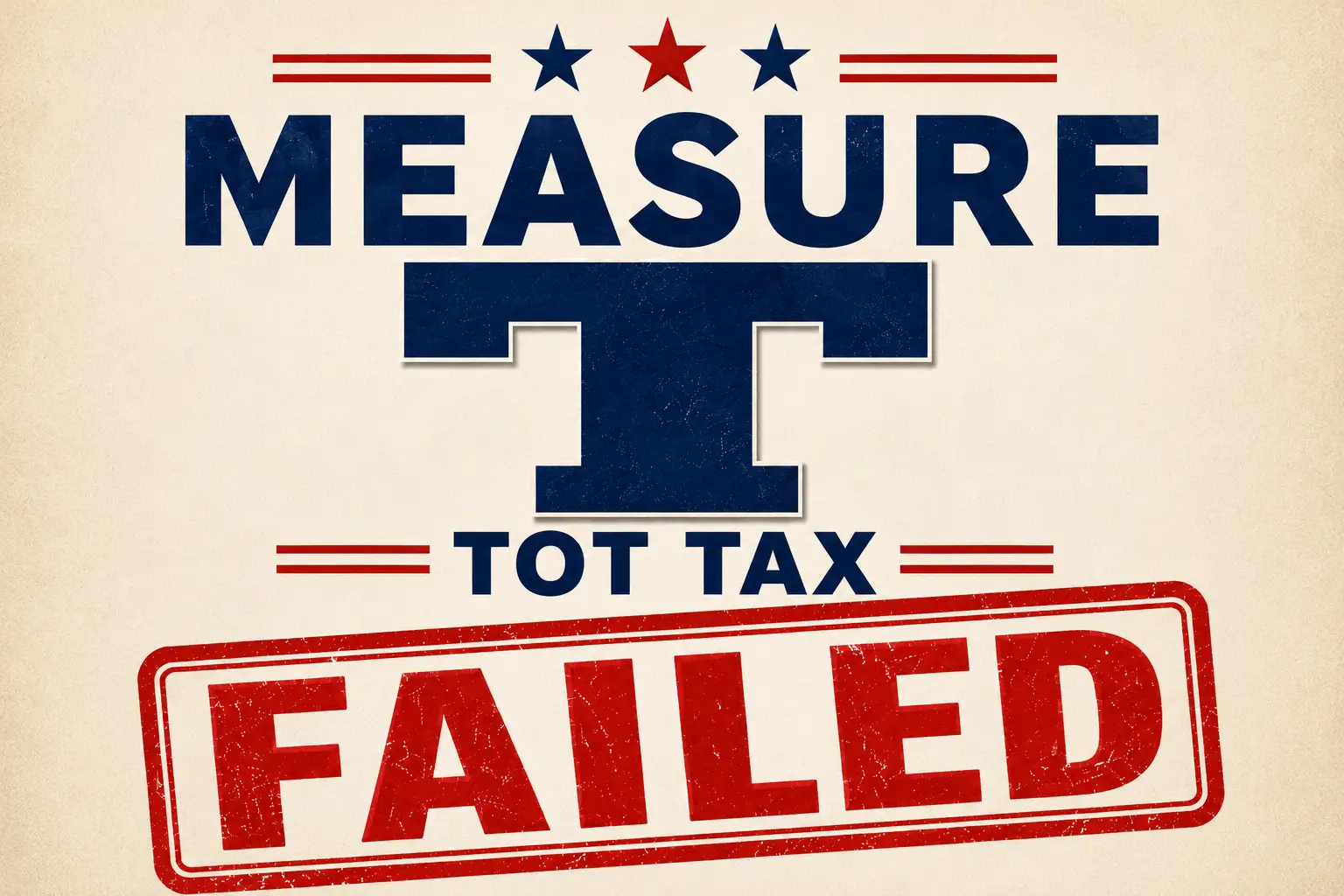
According to the latest unofficial election results, Measure T, the proposal to increase the City’s Transient Occupancy Tax (TOT), is headed for defeat, receiving 3,712 yes votes (37.75%) and 5,668 no votes (57.64%). All fifteen Hanford precincts have reported.
On the surface, Measure T was a vote on increasing the tax paid by visitors staying in local hotels and lodging facilities. However, the outcome may reveal something much larger than opposition to a single tax proposal.

For many residents, this election appears to have become a referendum on trust, accountability, and the direction of city leadership.
Voters May Be Experiencing Rate Fatigue
Over the past several years, Hanford residents have watched one discussion after another involving increased costs, fees, and rates.
Whether it has been utility discussions, refuse rate increases, future funding requests, or conversations about additional revenue sources, many residents have expressed concerns that the answer from City Hall too often seems to involve asking taxpayers for more money.
While city officials have argued that many of these increases are necessary to maintain services and keep up with rising costs, voters may be reaching a point where they are asking a different question:
How much is enough?
The nearly fifty-eight percent opposition to Measure T suggests that a significant portion of the electorate was not convinced that another tax increase was the right solution.

More Than a Vote on a Hotel Tax
Many residents remember supporting Measure H with the expectation that important community priorities would be addressed through existing revenue sources. Over time, questions have emerged about how those funds have been allocated and whether taxpayers are seeing the results they expected.
Now, discussions surrounding future park infrastructure and park maintenance funding are adding another layer to the conversation.
City leaders have discussed the possibility of pursuing a future ballot measure to generate additional funding for parks and recreational facilities. Depending on how those discussions move forward, voters could potentially be asked to consider a sales tax increase, parcel tax, bond measure, or another funding mechanism to support park expansion, improvements, and long-term maintenance.
For some residents, that conversation is arriving at the wrong time.
Many voters believe they have already approved measures intended to provide resources for community improvements. As a result, some are questioning why another funding measure may be needed before existing revenue sources have fully demonstrated measurable results.
Fair or unfair, there appears to be a growing sentiment among some citizens that taxpayers are being asked to pay more and more while expecting City Hall to do more with the resources it already has.
A Trust Issue More Than a Tax Issue?
Measure T may ultimately be remembered less as a hotel tax proposal and more as a test of public confidence.
When voters trust their elected officials, they are often willing to support new investments and funding measures. When that trust begins to weaken, even proposals with legitimate goals can struggle to gain traction.
Some residents have expressed concerns about transparency. Others have questioned spending priorities. Still others have simply grown weary of what they perceive as a recurring pattern of rate increases, fee increases, and discussions about new taxes.
The unofficial results suggest many voters were not persuaded by the city’s case for increasing the TOT.
For some, the vote may have been less about hotels and more about sending a message.
Looking Toward November
The defeat of Measure T may have implications that extend beyond a single ballot measure.
Local elections provide voters with an opportunity to evaluate the performance of their elected officials and determine whether they want the city to continue on its current path or move in a different direction.
The possibility of a future parks funding measure could become part of that discussion. If voters are eventually asked to consider a new sales tax, parcel tax, or bond for park infrastructure and maintenance, city leaders may first need to convince residents that existing revenue sources are being used effectively and efficiently.
As Hanford moves closer to future City Council elections, voters will have an opportunity to decide who they believe is best positioned to address the community’s concerns and priorities.
The Bottom Line
While the official canvass is still pending, the current numbers leave little doubt about the message voters appear to be sending.
Measure T is currently losing by nearly twenty percentage points, with all precincts reporting.
For many residents, this election may not have been solely about a hotel tax.
It may have been about rate increases after rate increases. It may have been about concerns over spending priorities. It may have been about growing discussions of future taxes, parcel taxes, sales taxes, or bond measures. It may have been about accountability and transparency.
Most importantly, it may have been about trust.
And if the unofficial results hold, many voters appear to be saying that before City Hall asks for more, it should demonstrate results with the resources it already has.
What do you think? Was Measure T defeated because of the tax itself, or was it a reflection of broader concerns about the direction of city leadership? Share your thoughts in the comments below.

Join the Conversation
Join the Conversation
Log in with Google, Facebook, or your WordPress account to leave a comment.
Support KNN
Choose your support amount
Enjoying local news? Support King's Network News and help keep independent community coverage moving forward.
Donate with Cash AppSupport KNN local news
Prefer to scan? Use the Cash App QR code below.


Francisco Ramirez

Francisco Ramirez Jr. is the founder of Kings Network News and creator of Kings Network Business, a platform focused on community engagement, local business support, and digital media innovation across California’s Central Valley.
A former Mayor of Hanford, California, Ramirez launched the popular Winter Wonderland event and brings more than 20 years of experience in business consulting, media strategy, marketing, and entrepreneurship. He is also a motivational speaker, strategist, author, podcaster, and experienced web and graphic designer.
Ramirez created The Invisible Kid: Courage to Succeed, an anti-bullying and self-esteem seminar that has inspired youth throughout the region. Through journalism, consulting, and community-driven projects, he continues working to inform, inspire, and empower others to grow, lead, and make a positive impact.









Join the conversation
Share your thoughts on this story.
Be the first to share your thoughts on this story.