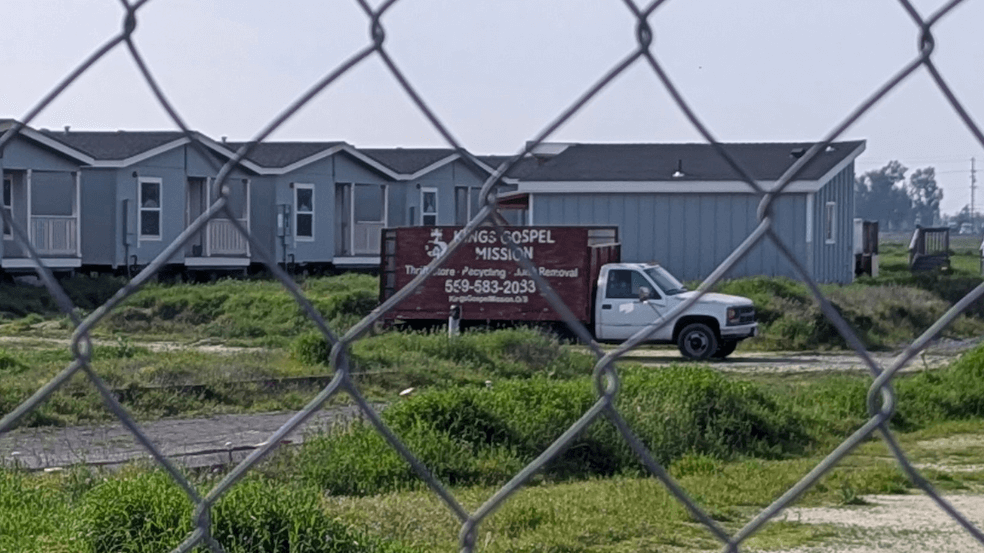

As lawsuits and public complaints increased in 2025, attention turned toward publicly funded housing projects associated with Prefab Innovations and the impact on local government agencies that committed taxpayer resources to developments that did not reach full completion.
In Kings County and the City of Hanford, the Triangle Courtyard project was approved as a permanent supportive housing development intended to serve individuals experiencing homelessness. Over time, the project encountered delays, contractor disputes, and reported budget shortfalls that required deadline extensions and additional fundraising efforts.
These circumstances raise an important policy and legal question for local government leaders: What remedies are available when a publicly funded housing project does not meet contractual and grant performance requirements?
This section of the investigation examines the Triangle Courtyard project, the public investment involved, and the legal mechanisms that may exist for financial recovery. It does not allege criminal wrongdoing. It focuses on contractual obligations, grant compliance, and public accountability.

The Triangle Courtyard Project and Public Investment
Triangle Courtyard was approved by Kings County officials under California’s Homekey program, which was created to expand housing for individuals experiencing homelessness during the COVID-19 pandemic.
According to published reports and county records, the Kings County Human Services Agency and Cornerstone Community Alcohol and Other Drug Recovery System Inc. were awarded approximately $4.3 million in Homekey grant funding during the 2022 to 2023 fiscal year. The funds were designated for site development and the installation of 24 factory-built modular homes on donated land in Hanford.
Prefab Innovations, led by David Clevenger Jr., was selected to complete the remaining construction work after a previous contractor did not deliver all required units.
Subsequent county updates acknowledged that only 20 of the 24 homes were delivered and that the project experienced delays and cost increases. A reported budget shortfall of more than $580,000 emerged in 2023. The California Department of Housing and Community Development granted multiple deadline extensions, including into April 2024.
Despite additional grant applications and private donations, the project did not achieve full completion within the original funding timeline and scope of work. As a result, Kings County and the City of Hanford were left with a partially completed project funded by public dollars and subject to grant compliance requirements.
Contractual Obligations and Performance Standards
Public housing projects funded through state and federal programs are governed by performance standards and contractual requirements that typically include:
Defined scope of work
Construction and completion deadlines
Occupancy and certification benchmarks
Financial documentation and accountability
Compliance with building codes and inspections
Reporting and audit obligations
When contracted work is not completed as specified, public agencies may evaluate remedies that are standard in government contracting, including:
Breach of contract claims
Recovery of unspent or disallowed funds
Liquidated damages for delay
Enforcement of indemnification provisions
Surety bond claims when applicable
Claims for unjust enrichment when deliverables are not achieved
These mechanisms exist to protect public resources and ensure that taxpayer funds are used for their intended purposes.
Potential Grounds for Financial Recovery
Based on the project’s incomplete status and publicly reported information, legal analysts say Kings County and the City of Hanford could evaluate several potential recovery pathways.
1. Breach of Contract
If contractual obligations were not met, including delivery of all required housing units or compliance with deadlines, the county could consider a breach of contract claim based on nonperformance.
Key factors would include:
Whether the scope of work was fully completed
Whether deadlines were met
Whether occupancy certifications were obtained
Whether construction conformed to contract specifications
Potential remedies could include damages, restitution, or termination for cause.
2. Recovery of Public Funds Through Grant Compliance
Many grant agreements include provisions allowing agencies to recover funds when performance conditions are not satisfied.
This process may involve:
Recoupment of funds tied to incomplete units
Recovery of costs deemed ineligible or unsupported
Reimbursement of disallowed expenditures identified through audit
Grant compliance audits are a standard oversight tool in publicly funded projects.
3. Audit and Forensic Accounting Review
Local governments may initiate or request a forensic accounting review of project expenditures.
Such reviews typically analyze:
How grant funds were disbursed
Whether funds were applied to approved construction activities
Whether costs were properly documented
Whether transactions occurred between related business entities
This process does not presume wrongdoing. It establishes whether financial practices complied with grant and contract requirements.
4. Cross-Entity Liability
Court filings in related cases list several business entities connected to David Clevenger Jr., including:
Prefab Innovations Inc.
Community Impact Corps Inc.
When multiple related entities are involved, governments may examine whether legal doctrines such as alter ego liability or piercing the corporate veil apply. These doctrines allow courts to consider whether corporate separateness was maintained or whether assets and operations were commingled in a way that affects contractual responsibility.
Any such determination would require judicial review and evidence presented in court.
5. Grant Compliance and Reporting Issues
If reporting requirements or certifications related to project completion were inaccurate or incomplete, agencies may evaluate remedies under grant compliance statutes.
This does not require proof of criminal fraud. It involves assessing whether:
Funds were retained despite incomplete performance
Project deliverables were not achieved as reported
Required documentation was deficient
Such findings can support recovery of funds and administrative remedies.
Why This Matters to Hanford and Kings County
Triangle Courtyard was part of Kings County’s strategy to address homelessness.
Each incomplete housing unit represents:
A lost opportunity for permanent housing
Delays in serving vulnerable populations
Reduced effectiveness of public investment
Potential erosion of public trust
Housing policy experts note that when projects fail, local governments may be forced to seek additional funding to complete them, effectively paying twice for the same units.
Those costs ultimately fall on taxpayers.
Public Accountability and Fiduciary Duty
Local governments have a fiduciary duty to safeguard public funds. This includes:
Monitoring contractor performance
Enforcing contractual obligations
Pursuing recovery when projects fail to meet standards
Reporting deficiencies to oversight agencies
Failure to pursue recovery can raise concerns during audits and reviews by state or federal agencies.
In many cases, governments are required to document good faith efforts to recover funds before writing off losses.
Community Impact and Confidence in Housing Programs
Early housing initiatives tied to Prefab Innovations were presented as innovative solutions to homelessness. Subsequent disputes and litigation have created uncertainty for residents, donors, and public agencies.
Housing advocates caution that contractor failures can affect future funding decisions. Granting agencies may scrutinize jurisdictions with unresolved compliance issues. Community support for new housing projects may weaken.
Financial accountability therefore becomes both a legal responsibility and a policy necessity.
Regulatory Oversight
The Contractors State License Board and the California Department of Housing and Community Development play roles in contractor regulation and grant compliance.
Public posts indicate that some individuals have filed complaints with regulatory agencies, and court filings show multiple lawsuits remain active. Whether formal regulatory investigations are underway has not been publicly confirmed.
A Pattern of Risk
Across Tulare, Hanford, and Fresno, publicly reported information shows a recurring pattern:
Ambitious housing projects
Commitments of public and private funds
Project delays and financial shortfalls
Multiple related business entities
Litigation and public complaints
Incomplete or disputed outcomes
For Kings County and the City of Hanford, this pattern underscores the importance of examining contractual compliance and evaluating whether recovery is warranted.
Conclusion
The Triangle Courtyard project was intended to provide permanent housing for individuals experiencing homelessness in Hanford. Its incomplete status has raised broader questions about oversight, grant compliance, and the tools local agencies may use to protect taxpayers when performance requirements are not met.
For Kings County and the City of Hanford, the issue is not simply whether the project was delayed. It is whether public funds were fully and properly used for their intended purpose and whether recovery actions should be considered when contractual obligations were not met.
As legal proceedings continue and additional information becomes available, the responsibility of local government will be to ensure transparency, accountability, and protection of taxpayer resources.
The story of Prefab Innovations now extends beyond housing construction. It raises broader issues of governance, oversight, and the challenges of administering publicly funded housing programs.
Legal Notice
This article is based on publicly available records, including court filings, government contracts, and published news reports. No court has ruled on the matters discussed. All parties named are presumed innocent unless and until proven otherwise in a court of law. This report examines issues of public accountability and grant compliance and does not allege criminal wrongdoing.
Discussions are powered by Facebook. Community standards apply. Comments attacking Kings Network News, its publisher, staff, or contributors may be removed and may result in loss of access.
Francisco Ramirez is the founder of Kings Network News and creator of Kings Network Business, a platform that blends business networking, community support, and social media to uplift local entrepreneurs.
As a former Mayor of Hanford, California, he launched the Winter Wonderland event and brings over 20 years of business consulting experience. He is also a motivational speaker, life coach, strategist, author, podcaster, and skilled web and graphic designer.
He created The Invisible Kid: Courage to Succeed, a seminar on self-esteem and anti-bullying that has inspired youth across the region. Through media and consulting, Francisco empowers others to lead, grow, and make an impact.