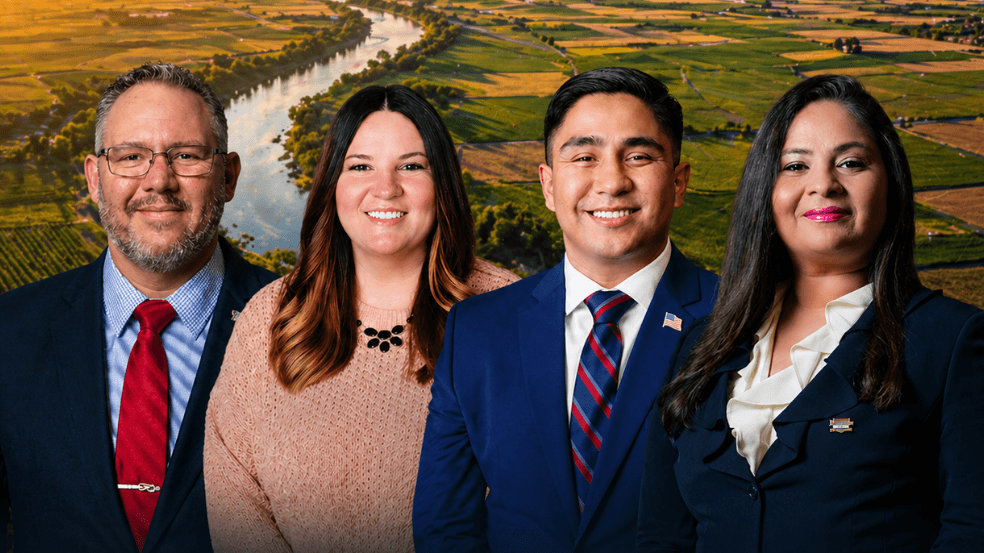
A group of Central Valley mayors came together for a detailed and candid discussion on the realities of governing small cities, offering a deeper look into the economic, infrastructure, and policy challenges shaping communities across the San Joaquin Valley.
The panel, hosted by the Maddy Institute, featured Coalinga Mayor Nathan Vosburg, Lemoore Mayor Patricia Matthews, Delano Mayor Salvador Solorio-Ruiz, and Kerman Mayor Maria Pacheco. Each mayor brought firsthand insight from their city, but the conversation revealed a consistent theme, many of the same issues are being felt across the region regardless of city size.
The Maddy Institute, established by the California Legislature, is a nonpartisan public policy organization that brings together Republicans and Democrats to engage in meaningful dialogue on public issues. That mission was clearly reflected in this panel, where leaders from different political perspectives focused on practical solutions rather than political division. Instead of partisan talking points, the discussion centered on real-world governance, where results, not rhetoric, define leadership.
The Reality of Running a Small City
One of the most pressing issues raised throughout the discussion was the imbalance between limited financial resources and growing expectations. Smaller cities are expected to provide the same level of services as larger municipalities, including police, fire protection, infrastructure maintenance, and utilities, but with significantly smaller tax bases and staffing levels.
Coalinga Mayor Nathan Vosburg highlighted how this reality plays out in something as essential as water infrastructure:
“When you look at something like water as a utility, the costs and the responsibilities don’t go away, but the number of people paying into that system is smaller.”
That dynamic forces cities into difficult financial decisions, where leaders must stretch every dollar while still maintaining critical systems that residents depend on daily.
Housing Demand, Growth, and Local Control
Housing remains one of the most urgent challenges across the Central Valley. As population growth continues, smaller cities are being asked to accommodate new development while ensuring infrastructure, water supply, and public services can keep pace.
Lemoore Mayor Patricia Matthews made it clear that cities are not standing still, but actively working to remove internal barriers and accelerate development:
“We’re trying to be housing-friendly, cutting that red tape and shortening some of the turnaround time on the city side to promote housing.”
This reflects a broader shift among Valley cities, where leaders are recognizing that delays in permitting and approvals directly impact affordability, availability, and overall economic growth.
Being at the Table Matters
Beyond local operations, the panel emphasized the importance of representation at the regional and state level. Smaller cities often risk being overlooked in policy decisions unless they actively engage in the process.
Vosburg underscored that reality with a direct and memorable statement:
“You need to be at the table, because if you’re not at the table, you’re not even close to being on the menu.”
Participation in organizations such as the California League of Cities and regional forums was described as essential for ensuring rural communities have a voice in decisions that impact funding, infrastructure, and long-term planning.
Economic Development Is Not Optional
Economic growth remains a central priority, but it comes with its own set of challenges. Smaller cities must compete with larger urban areas that often have more resources, incentives, and infrastructure already in place.
Delano Mayor Salvador Solorio-Ruiz emphasized that success starts internally, with leadership alignment and a clear direction:
“It’s vital for the success of the city to have a strong team, whether it’s the city council or staff, working together.”
He also made it clear that cities must actively position themselves for opportunity:
“We have a sign up front that says we are open for business all the time.”
That mindset reflects a broader strategy across the Valley, where cities are working to attract investment while supporting existing industries like agriculture and logistics.
From Small Businesses to Big Opportunity
While large-scale development often gets the most attention, the panel also made it clear that local entrepreneurship is just as critical to economic stability.
Kerman Mayor Maria Pacheco highlighted the importance of making opportunity accessible to everyone, regardless of scale:
“I want to make sure that everyone who has a dream to become an entrepreneur is able to do so, whether they’re selling elotes or opening a new grocery store.”
Her comments reflect a broader understanding that strong local economies are built not only through major projects, but through the success of small businesses, family ventures, and first-time entrepreneurs.
Shared Challenges, Regional Impact
Throughout the discussion, it became clear that issues such as water availability, infrastructure investment, housing demand, and economic development are not isolated, but interconnected across the entire San Joaquin Valley.
Leaders pointed out that aging infrastructure, rising costs, and limited funding continue to create pressure on local governments. At the same time, recruitment and retention in public safety, along with maintaining essential services, remain ongoing concerns for smaller municipalities.
The conversation reinforced that no single city can address these challenges alone. Regional coordination, state engagement, and collaboration between jurisdictions will be necessary to move forward effectively.
Solutions Over Politics
In the end, the panel demonstrated that effective leadership at the local level is not driven by party affiliation, but by the ability to solve problems.
The Maddy Institute’s role in bringing together leaders from both Republican and Democratic backgrounds created a space where policy, not politics, guided the conversation. The result was a discussion grounded in reality, focused on practical solutions, and centered on the needs of the communities these mayors serve.
While larger cities such as Fresno, Visalia, and Hanford were not part of this particular panel, the challenges discussed reflect a broader regional reality. Across the Central Valley, cities are navigating the same pressures, balancing growth with sustainability, managing limited resources, and working to create long-term opportunity.
The message from the panel was clear, the challenges are significant, but so is the commitment to addressing them through collaboration, leadership, and a continued focus on real solutions.
What do you think is the biggest challenge facing small cities in the Central Valley right now?
Drop your thoughts in the comments below.
King's Network Article Pulse
Support KNN
Choose your support amount
Enjoying local news? Support King's Network News and help keep independent community coverage moving forward.
Donate with Cash AppSupport KNN local news
Prefer to scan? Use the Cash App QR code below.


Join the conversation
Share your thoughts on this story.
Be the first to share your thoughts on this story.